Summary:
Working from home has significant advantages.
It began with a sudden surge in demand during the COVID-19 pandemic, when the government implemented measures that led to a mass exodus of office workers. Radicalized governance triggered the Law of Unintended Consequences. If the government works to kill businesses, they will leave and seek out more friendly states to operate in. If the government kills offices, commercial corridors, and residential neighborhoods by tolerating violence and criminal behavior, people will move out and seek safer environments.
Occasionally, a dramatic shift emerges, such as technology that enables us to work from home, make purchases online, use AI, DoorDash, and Uber-like or Lyft-style transportation.
We can hunker down with proper technology and get far more done than in an office environment.
Add the public’s response, which created a shifting paradigm, and you get a real mess in some cities. This ‘real mess’ refers to the sudden exodus of office workers, the subsequent decrease in demand for office space, and the economic challenges faced by property owners and lenders. And there is no turning back Never to return... next chapter...how to reposition one billion square feet of unused office space.
Article:
A Reflection on the Impact of Remote Work on Urban Office Development: The ‘“hifting Paradigm,’ a term I use to describe the significant changes in the real estate market due to the rise of remote work. This term refers to the profound shift in work patterns and the subsequent Impact on urban office development.
One of the most significant unintended consequences of the COVID-19 lockdowns is that employees and organizations have increasingly adopted remote work arrangements. This shift, which I refer to as a “s“ismic change in work patterns, a term I use to describe the unprecedented and fundamental change in how we work, has fundamentally altered how we work. This seismic shift is a result of the widespread adoption of remote work, facilitated by technological advancements and changing attitudes toward work-life balance.
The downside is that this new in-home working paradigm has returned to haunt many prominent perpetrators who benefited most from the lockdowns. They were the mega-giant investment firms, large corporations, big pharma, and mainstream media entities — considered systemically too essential and exempt from many devastating consequences. These entities are now facing the challenges of a remote work environment.
The workforce has shown remarkable adaptability in the face of economic challenges, transitioning to remote work with innovative solutions such as Zoom meetings. The proliferation of software programs that facilitate the elimination of marginal employees and create a more efficient and leaner staff is a testament to our resilience and the potential for positive change in the face of adversity. This adaptability should instill hope and optimism for the future.
This shift, now the norm for tens of millions, has proven that we can be more efficient and productive than in a traditional office setting. Out of a workforce of 154,000,000, 12.2% work remotely full-time and 4.7% work remotely one-half time. This model is effective and holds promise for the future of work culture, offering a hopeful and inspiring outlook for the post-pandemic world.
https://remote.com/blog/remote-job-roles
https://www.usatoday.com/money/blueprint/business/hr-payroll/remote-work-statistics/
The benefits of remote work are numerous and promising, including reduced traffic, flexibility to work during the most productive hours, increased productivity, and, most importantly, freedom from organizational politics and ideologies. This shift has enabled many, including me, to work in ways that suit our natural rhythms, such as being a morning rather than a night person. We can work or be semi-retired, and it’s up to us. This empowerment and liberation are the true essence of remote work.
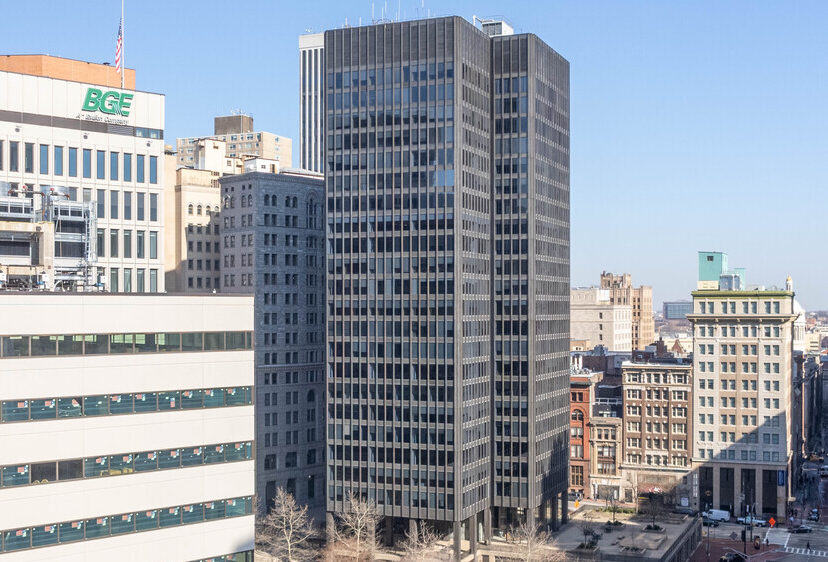
The economic implications of this shift are profound, particularly in the real estate market. Once bustling with activity, tower office buildings now stand empty and obsolete. The lack of demand for office space and a higher interest rate environment have intensified the strain on owners. At least 1 billion square feet of vacant and unoccupied office space in the U.S. requires repositioning.
The obvious answer is that office space should be converted to residential occupancy when feasible, with special financing vehicles for construction and tax credits to help make the transition viable. This shift represents a change in work culture and a significant economic transformation that necessitates urgent adaptation by property owners, lenders, and the government. The government initiated this mess as a political power grab and needs to take the lead in rectifying it. The time for action is now.
Office buildings are typically classified asd Class A, B, or C in commercial real estate. The differences are subjective and encompass pricing, location, construction quality, and amenities. Thousands of primarily Class B and C buildings need help staying afloat, with some losing 50% or more of their value.
https://www.statista.com/topics/3240/office-real-estate-in-the-us/#topicOverview
https://www.zerohedge.com/markets/chinese-offices-emptier-now-during-peak-covid-lockdowns-economy-crumbles
Despite the challenges posed by the remote work trend, major owners like Brookfield, Blackstone, and Starwood Capital Group are also victims of the shifting paradigm —a term used to describe the significant changes in the real estate market due to the rise of remote work. Many have chosen to adapt by abandoning older towers in downtown areas.
Renovations or repositioning of the building require revision. How about a 345,000-square-foot office building in Baltimore selling for $ 4 million, or $12 per square foot? There are hundreds of examples of office towers selling for pennies on the dollar, resulting in earthshaking losses for property owners and lenders who foreclose on the defaulted properties. Enders may be commercial banks, life insurance companies, or vehicles with securitized offerings.
Additionally, on the commercial property front, the long-lasting Impact of the COVID-19 fallout is that small businesses are under severe stress due to changing consumer habits. Consumers are financially stressed and lack the funds to spend. In particular, companies that rely on office workers are closing up shop. At this point, 40% of all restaurants are expected to close for various reasons, including reduced foot traffic, rising prices, increased street crime, and regulatory burdens. This will be accompanied by commercial vacancies that will be released only if new, willing tenants understand how challenging the restaurant business is. There are currently more than 1 million restaurants in the U.S., of which 70% are small, single-unit operators.
The second most prominent reason for moving to remote work is that progressive-leaning governments exacerbate the crashing prices by overlooking criminal activities and defunding police departments. Crime-ridden metro cities include Detroit, Memphis, Birmingham, Baltimore, St. Louis, Kansas City, Cleveland, Little Rock, Milwaukee, Stockton, Los Angeles, San Francisco, Oakland, and Seattle. However, considering the complex factors in these cities’ economic situations, such as high crime rates, Housing affordability, and social inequality, is essential.
There is no end in sight, and nothing will change unless the metro leadership is replaced in primarily progressive-leaning cities and towns, which are based on Marxist governing ideologies. The rule of Law (Law and order) must be re-established, and this change is both necessary and within our reach. It’s time for a call to action and a potential solution to the current situation.
Leaving urban blight and moving into the suburbs is part of the ‘Shifting Landscape.’ This shift presents an opportunity for positive change in urban and suburban development. We must address the issue of criminal acts going unpunished to ensure a balanced and safe urban environment. This is a matter of economic survival and a fundamental requirement for a thriving society.