Summary
One HP is the power required to lift 33,000 pounds one foot in 1 minute.
Summary:
HP is the measurement of energy capacity for doing work.
How much thrust can one horse pull? It depends on the horse and its strength.
https://en.wikipedia.org/wiki/Horsepower
In the 1920s, we could purchase a Duesenberg Model J, one of the most potent cars of the era, with power ratings ranging from 25 to 265 HP.
Today, it is common to find a vehicle with 400 HP and a superperformance car with 600 to 1,000 HP.
Article:
Horsepower (HP) is a standard unit of power adopted in the 1800s by Scottish Engineer James Watt. This historical context adds depth to the appreciation of the evolution of this concept. One HP is the power required to lift 33,000 pounds one foot in one minute.
Equivalency measures are in watts and British Thermal Units per hour. The electrical equivalent of 1 hp is 746 W and 2,545 British Thermal Units (Btu) per hour.
The subject becomes complex when we consider internal combustion engines (ICEs), electric motors, Turbine motors, the number of cylinders, sophisticated transmission-shifting components, rear-end gear differentials, and the rigging of engines with components such as superchargers and turbochargers. The versatility of horsepower across different engine types is intriguing and warrants further exploration. Additionally, technology has enabled engines to reach enormous horsepower levels.
Peak horsepower and revolutions per minute (RPM) also modify horsepower and torque. Higher RPMs and additional engine modifications can significantly increase HP and torque.
Can we envision a vehicle with 600 horsepower or more? How would it be to line up a team of 600 horses with proper equipment, have them work hard, and measure their output? HP, a unit of power, is equivalent to lifting 550 pounds per foot per second.
There is a difference between horsepower and torque. Torque is the rotating force produced by an engine’s crankshaft. The greater the torque, the greater the ability to perform work. The measurement is in pound-feet and newton-meters.
There are two types of torque: static torque, which is similar to a torque wrench tightening a bolt, and dynamic torque, which is associated with the thrust. A mathematical formula is related to the differential of horsepower and torque.
Let’s compare the HP of various engine types:
A healthy human can produce 1.2 HP, but only sustain .1 HP over several hours. Trained athletes can make 2.5 or more and sustain .35 over several hours.
By comparison, I aim to illustrate how other engines compare to automobiles, industrial machinery, and large commercial transport vehicles.
A lawnmower may have between 5 and 7 horsepower
A John Deere tractor has a power range of 22-910 hp.
Depending on the model, a Caterpillar tractor has a power rating ranging from 360 to 1900 hp.
Honda Civic is available with 150 HP and 315 HP, powered by a 2-liter VTEC 4-cylinder engine.
Dodge Challenger’s 6.2-liter Hellcat V-8 produced 707 HP at 6000 rpm.
An 18-wheel, long-distance diesel truck could have between 400 and 2,400 HP, be built with high torque, and be made more efficient by a 10- to 20-speed transmission.
The Freight Locomotive has between 2,000 HP and 4,500 HP and can have one or more engines running simultaneously.
Jet Engine- up to 75,000 HP for each engine, a standard four, and up to ten engines, or 300,000 HP.
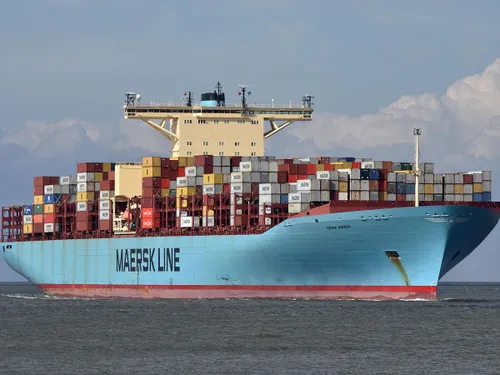
Cargo Ship- 14-cylinder, extra-large engine on the Wartsila. TheWartsilaa 96C engine has 109,000 HP. Each cargo ship has 1 or 2 main engines, with several auxiliary engines powering onboard systems.
Now, I’m going to use my one HP and get a large cup of coffee. WhoWho’sith me?